IntegrityStar, November 2026 edition
The Compliance and Ethics Culture Survey has been administered every two years at UCF since 2016, and serves as one of the primary tools for evaluating the university’s ethical culture, awareness of compliance resources, confidence in reporting mechanisms, and perceptions of leadership accountability. While the survey provides a decade of institutional context, this article focuses on trends from 2020–2026 to highlight the most recent developments and current state of UCF’s compliance and ethics culture.
Overall, the results continue to demonstrate a strong and mature compliance and ethical culture at UCF, with several key measures improving during the six-year period, while opportunities remain for continuous improvement.
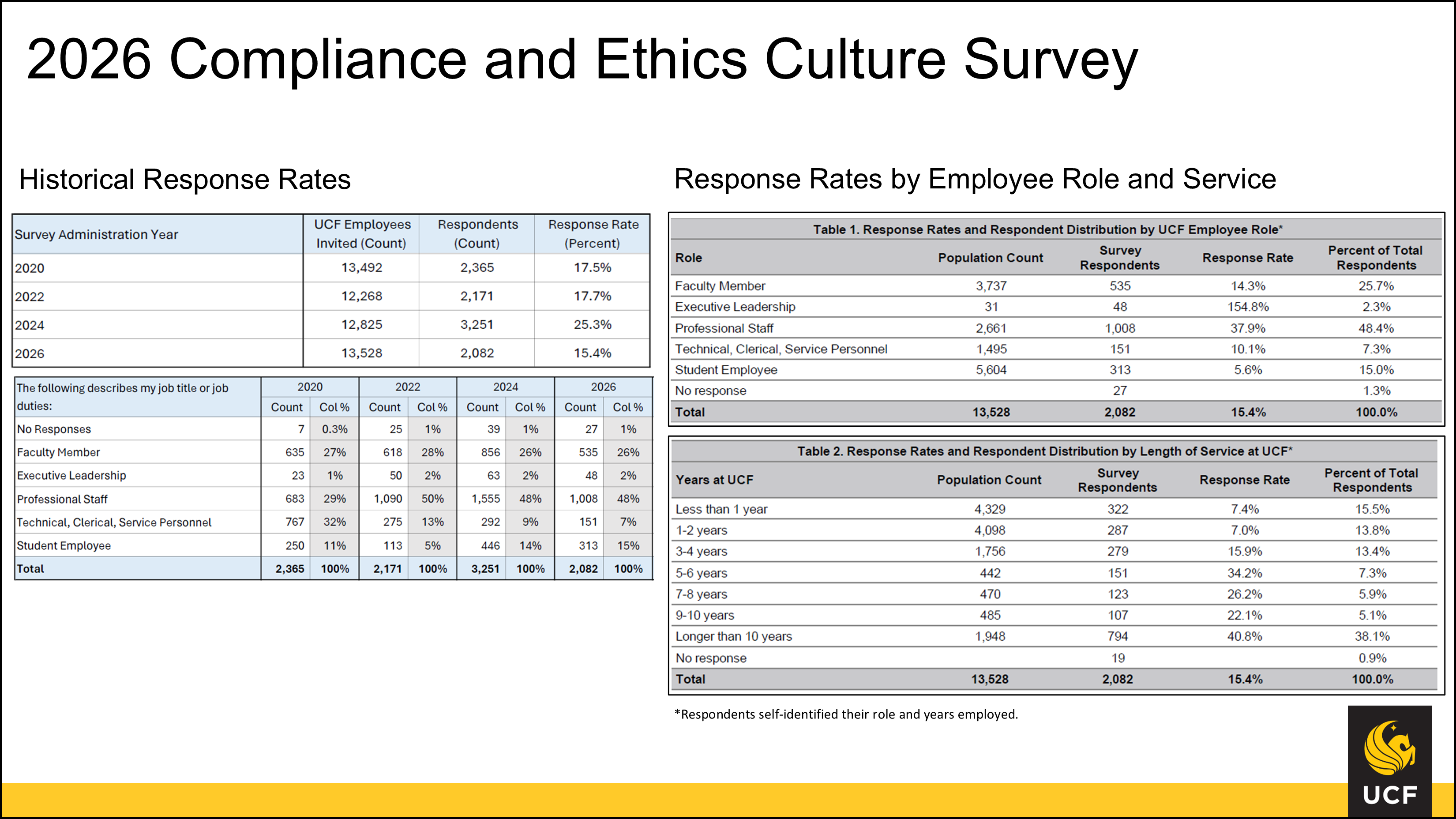
The survey was issued to all university employees during Spring 2026. More than 2,000 employees participated, representing faculty, staff, executive leadership, and student employees.
Response rates by employee role and length of service were self-identified and gave perspective on the survey respondents. Employees who have worked at UCF 10 years or more make up the largest population of respondents, as did the employee classification of Administrative and Professional (A&P) employees.
Responses to the survey were anonymous, providing employees an opportunity to share candid feedback regarding workplace culture and ethics-related concerns. The survey helped measure progress over time and identify areas where additional resources or communication may be beneficial.
Key Trends (2020-2026)
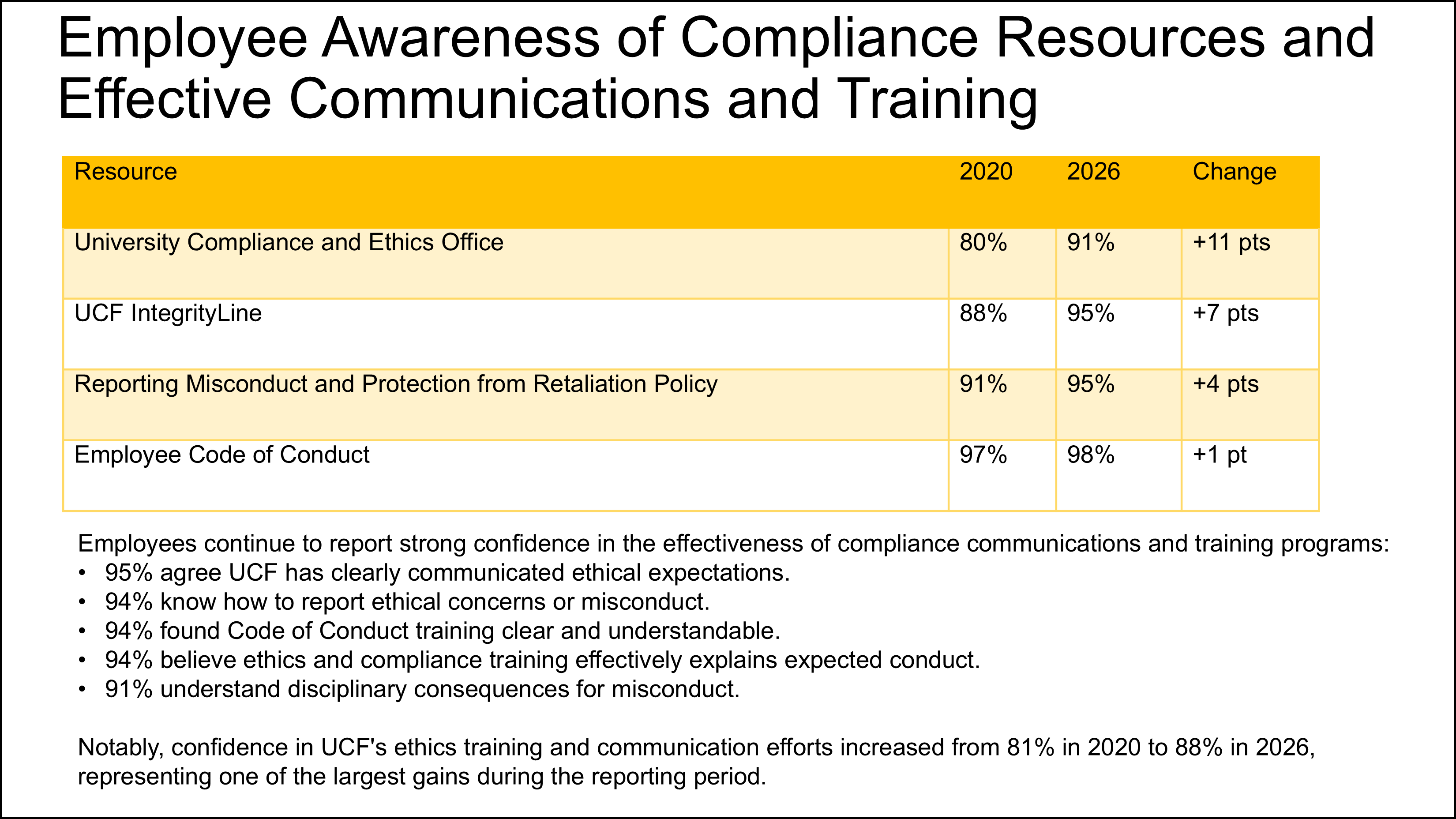
Employee awareness of compliance resources remains one of the strongest findings in the 2026 survey. Over the 2020–2026 period, familiarity with major compliance resources has either increased significantly or remained consistently high.
Awareness of the Compliance and Ethics Office increased from approximately 80% in 2020 to 91% in 2026, while familiarity with the UCF IntegrityLine rose from 88% to 95%. Knowledge of the Reporting Misconduct and Protection from Retaliation Policy also reached 95%, reflecting sustained outreach and communication efforts. Familiarity with the Employee Code of Conduct remained exceptionally strong, increasing from 97% to 98%.
Beyond awareness of formal resources, employees also reported knowing where to locate university policies, procedures, and regulations, further indicating that communication channels and training programs are reaching the workforce effectively. These findings demonstrate the maturity of the compliance program and suggest that employees generally understand where to seek guidance or report concerns. High awareness is an important predictor of organizational resilience because employees are more likely to seek assistance, ask questions, and raise concerns when they know resources are available. The strong awareness measures also indicate that compliance communications, training campaigns, newsletters, and reporting outreach are having their intended effect.
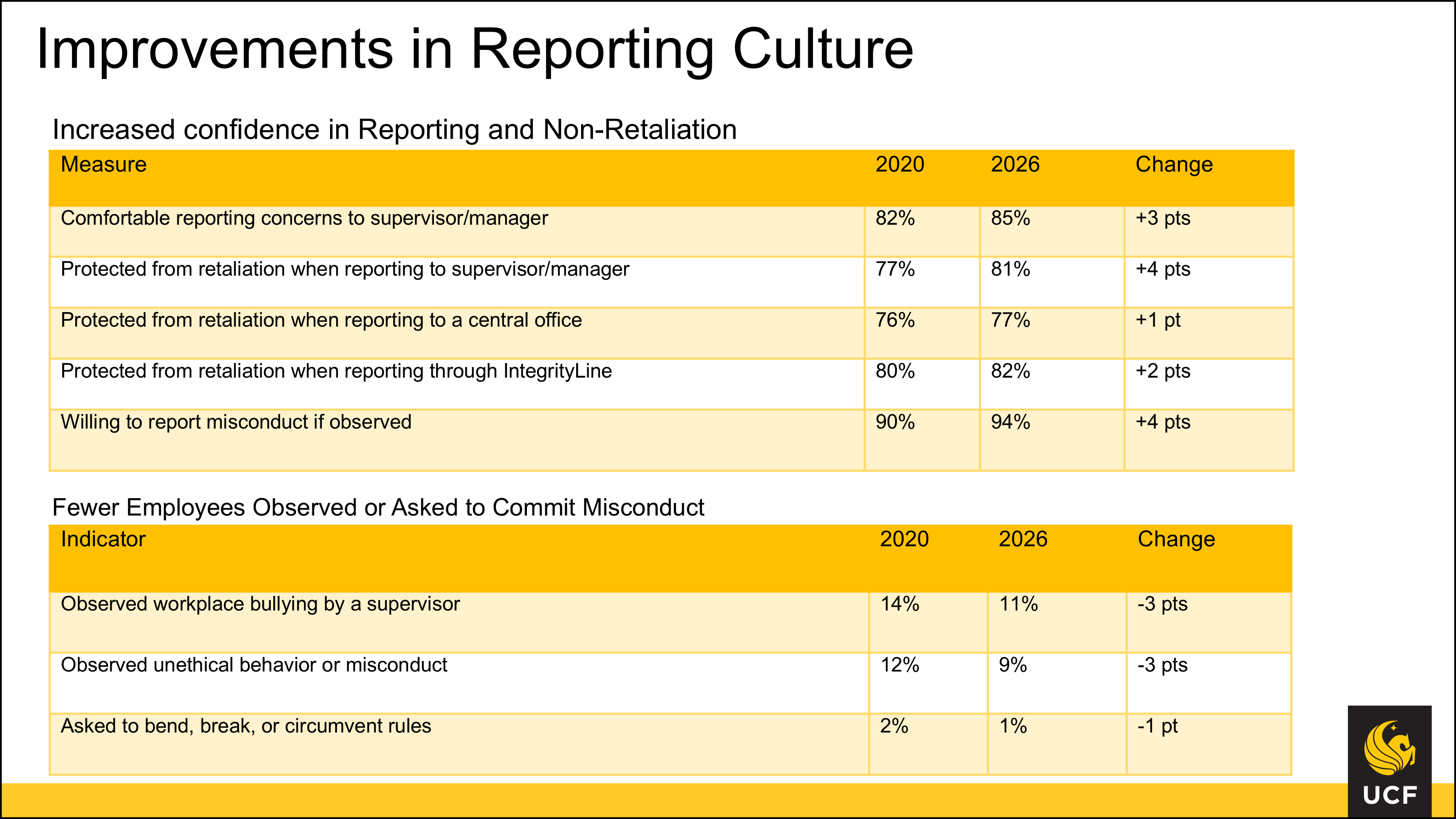
We also saw improvements in employees being comfortable reporting concerns and feeling protected from retaliation. Several survey indicators suggest positive movement in workplace culture between 2020 and 2026. Reports of observed misconduct declined from approximately 12% of respondents in 2020 to 9% in 2026. Reports of workplace bullying involving supervisors also decreased from about 14% to 11% during the same period. Another notable improvement involved pressure to violate rules or policies, which declined from approximately 2% to 1%. These reductions indicate that fewer employees are encountering problematic behavior and may reflect the combined impact of ethics training, policy communication, and cultural improvement efforts.
Importantly, employees who did observe misconduct became more likely to report it. Survey data indicates that the reporting rate among misconduct observers increased over time, suggesting greater confidence in organizational processes and support mechanisms.
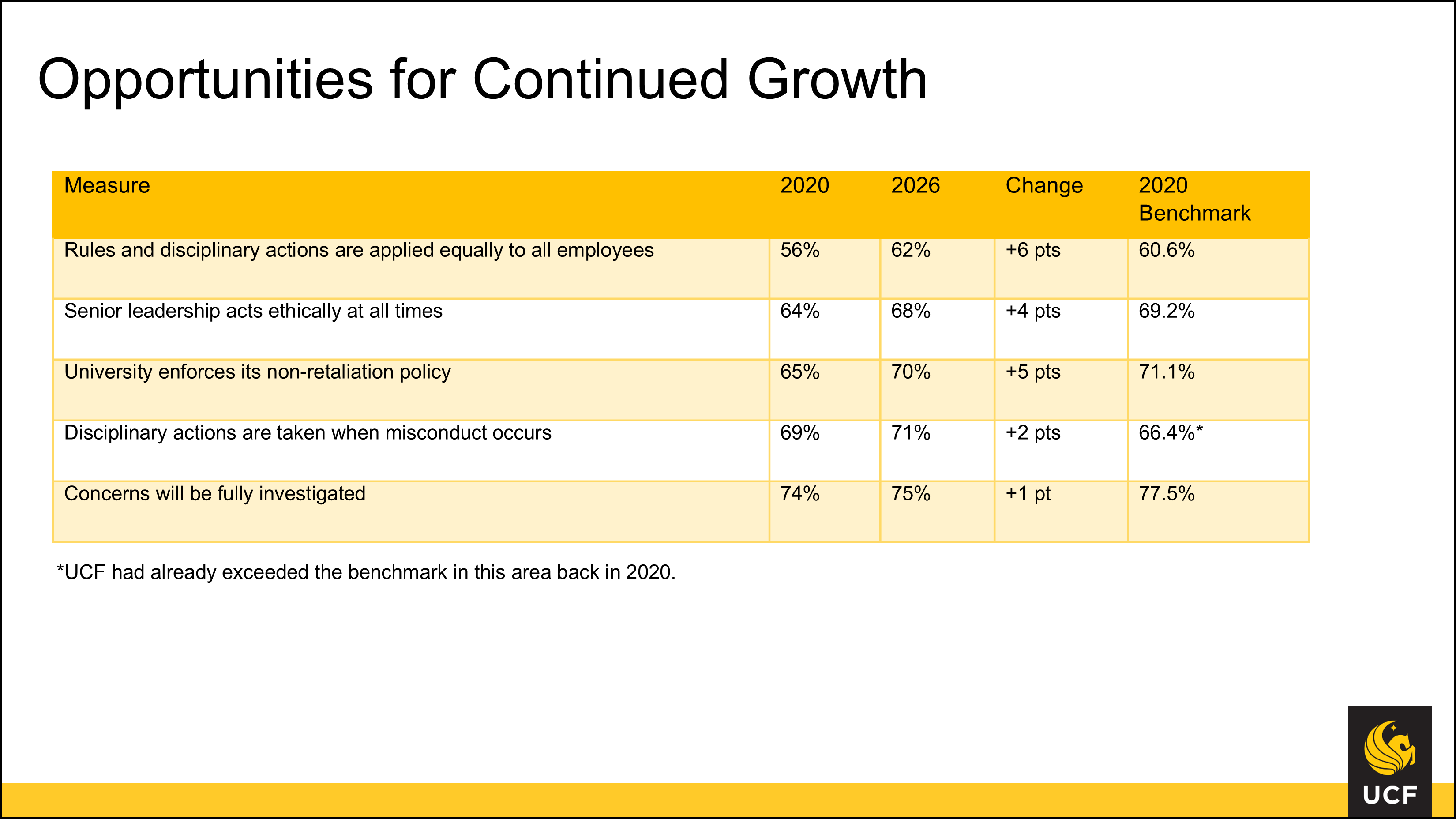
Although most survey indicators exceed 80% favorable responses, perceptions related to accountability and organizational fairness remain lower than other areas. In 2020, Ethisphere, the company that awards The Most Ethical Companies designation, performed our survey and provided benchmarking data, mostly representing corporations. In response to that survey, University Compliance and Ethics took steps to improve awareness on how the university responds to concerns, including adding a case corner to the IntegrityStar newsletter. While improvements are shown in the table above, the team will continue focusing on improving perceptions around accountability and fairness.
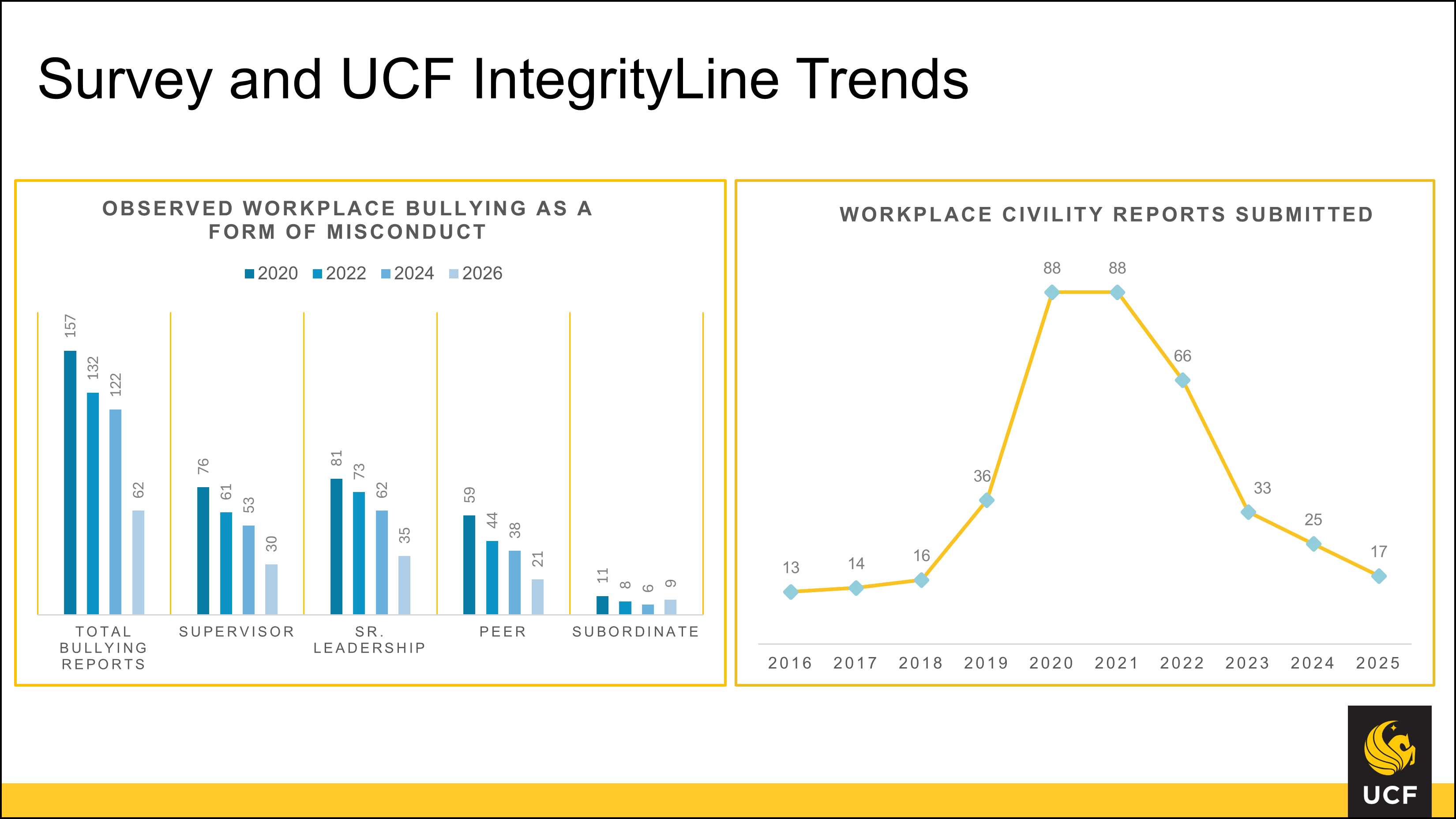
Total bullying reports in the survey decreased from 157 in 2020 to 62 in 2026. Reports involving supervisors and senior leadership have also declined substantially during that period. This mirrors the trends shown in the 2025 UCF IntegrityLine report, published in the July 2026 edition of the IntegrityStar newsletter. Reports concerning workplace civility decreased to 17 reports last year. This positive downward trend is directly tied to University Compliance and Ethics’ efforts spanning several years, implementing tools and training for supervisors and employees.
Overall, the 2020-2026 trend data reflect a strong and increasingly mature compliance and ethics culture. The primary focus and challenge moving forward will be maintaining a strong ethical culture. Additionally, the university will evaluate ways to further enhance employee confidence in organizational accountability, while maintaining high levels of awareness, training effectiveness, and ethical engagement already achieved.